The Rise of Micro-Credentials: Are Short Courses Replacing Degrees Now ? 2025
In today’s fast-changing job market, the traditional four-year degree is no longer the only path to success. With technology evolving at a rapid pace and industries constantly reinventing themselves, many professionals and students are reconsidering how they gain skills.
Enter micro-credentials—short, focused courses designed to equip learners with specific skills in a fraction of the time it takes to earn a conventional degree. Over the past few years, micro-credentials have gained popularity worldwide, sparking an important debate: Could these short courses eventually replace traditional degrees?
This article explores the rise of micro-credentials, their benefits and limitations, and what they mean for the future of education and careers.
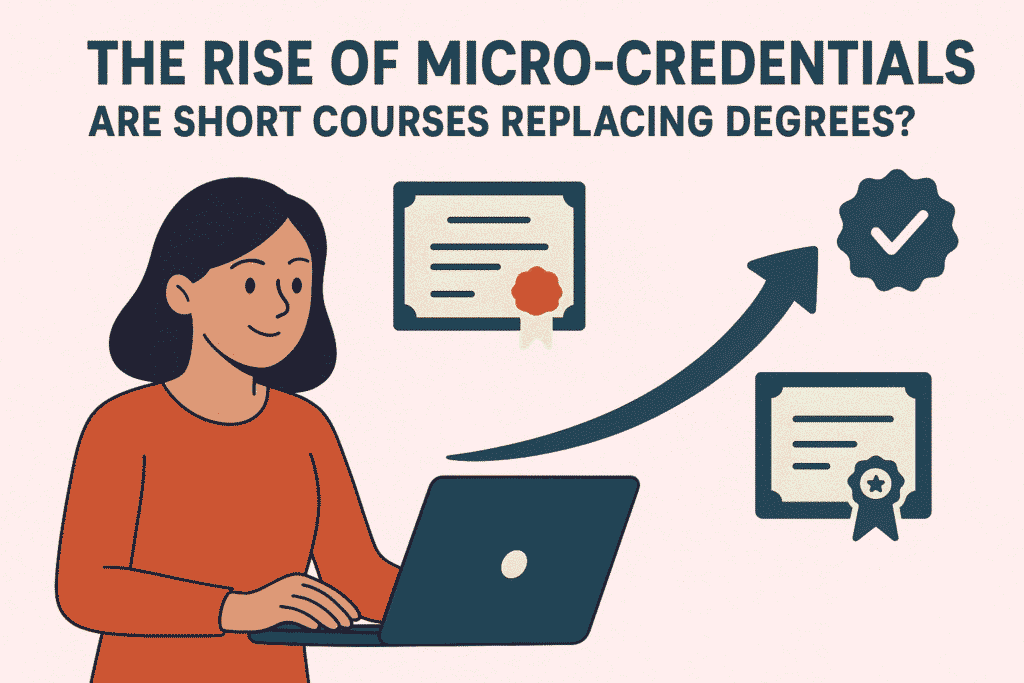
What Are Micro-Credentials?
Micro-credentials are short, skill-based certifications that allow individuals to quickly gain expertise in a specific area. Unlike full degrees, which cover broad subjects over several years, micro-credentials are narrow and targeted, focusing on practical skills that employers need right now.
Some popular examples include:
- A six-week course on data analytics
- A three-month certification in digital marketing
- A short program on cloud computing with AWS
- A crash course in UI/UX design or cybersecurity basics
These courses are often delivered online through platforms like Coursera, Udemy, LinkedIn Learning, Google Career Certificates, and edX. Many are offered by universities, tech companies, or industry organizations.
Why Micro-Credentials Are Becoming Popular
The popularity of micro-credentials has skyrocketed in recent years, and there are several reasons why more learners are choosing this path.
1. Faster Learning
Traditional degrees take three to four years to complete, while micro-credentials can be completed in weeks or months. This speed makes them ideal for people who want to upskill quickly without committing to a long academic program.
For instance, someone looking to move into data analytics can take a three-month course and start applying for relevant roles immediately instead of waiting years to graduate with a specialized degree.
2. Cost-Effective Alternative
One of the biggest barriers to higher education is cost. University degrees can cost thousands—or even tens of thousands—of dollars.
Micro-credentials are significantly more affordable, often ranging from ₹5,000 to ₹50,000 ($50 to $500) depending on the program.
This affordability makes education more accessible to students worldwide, especially those in developing countries or those who cannot afford traditional college tuition fees.
3. Relevant to Current Industry Needs
Traditional degree programs sometimes struggle to keep up with the rapid pace of industry changes. By the time a student graduates, some of what they learned might already be outdated.
Micro-credentials are designed in collaboration with industry experts, ensuring that the skills taught are up-to-date and job-ready. For example:
- A cloud computing certification might focus on AWS or Azure, the most in-demand platforms today.
- A digital marketing course may include latest trends like influencer marketing and AI-driven campaigns.
This direct link between training and employability is a huge advantage for learners.
4. Flexibility for Working Professionals
Many professionals want to upgrade their skills while continuing to work. Micro-credentials offer self-paced, flexible learning options that fit into busy schedules.
Unlike traditional degrees that require fixed class times, micro-credentials can often be completed online at any time, allowing learners to balance education with work and personal life.
5. Recognition from Employers
Initially, micro-credentials were seen as supplemental learning. Today, many top companies, including Google, Microsoft, and Amazon, have started recognizing micro-credentials as valid qualifications for certain roles.
Some employers even sponsor their employees to take these courses, viewing them as a cost-effective way to keep teams skilled and competitive.
How Micro-Credentials Compare to Degrees
While micro-credentials have many advantages, they also differ significantly from traditional degrees. Understanding these differences helps clarify where each option fits in today’s job market.
| Aspect | Micro-Credentials | Traditional Degrees |
|---|---|---|
| Duration | Weeks to months | 3–4 years |
| Cost | Low to moderate | High (often thousands of dollars) |
| Focus | Specific, skill-based | Broad, theoretical and practical knowledge |
| Recognition | Growing, especially in tech industries | Widely recognized and accepted globally |
| Career Opportunities | Good for specialized roles and quick upskilling | Opens doors to diverse career paths |
| Flexibility | High (online, self-paced options) | Moderate, usually structured schedules |
From this comparison, it’s clear that while micro-credentials excel in speed, cost, and industry relevance, degrees still hold strong for global recognition and long-term career growth.
Industries Driving the Growth of Micro-Credentials
Certain industries have embraced micro-credentials faster than others. This is largely due to the dynamic nature of technology and business trends.
1. Technology
Fields like software development, cybersecurity, and cloud computing change rapidly. Companies need employees who can learn new tools and frameworks quickly, making micro-credentials ideal.
Popular certifications in tech include:
- AWS Certified Solutions Architect
- Google IT Support Certificate
- Microsoft Azure Fundamentals
- CompTIA Security+
2. Digital Marketing
With businesses shifting online, digital marketing skills are in high demand. Short courses in areas like SEO, social media marketing, and content strategy help professionals stay ahead of trends.
3. Healthcare
Even in healthcare, professionals are turning to micro-credentials for specialized training. For example:
- Nurses taking short courses in telemedicine
- Doctors learning about healthcare data analytics
- Administrative staff upskilling in medical billing software
4. Finance and Accounting
Micro-credentials are helping finance professionals adapt to digital tools and compliance changes. Certifications in areas like FinTech, blockchain, and advanced Excel are becoming common.
Are Micro-Credentials Replacing Degrees?
The rise of micro-credentials has sparked an important question: Will they replace traditional degrees entirely?
The answer is not entirely, at least not yet. Here’s why:
Why Degrees Still Matter
- Global Recognition:
Degrees remain the standard qualification recognized worldwide, especially for roles in government, law, and medicine. - Depth of Knowledge:
Degrees provide comprehensive education that builds critical thinking, research abilities, and theoretical understanding. - Networking Opportunities:
College campuses offer valuable networking connections with peers, professors, and alumni, which short courses may lack.
The Role of Micro-Credentials
Micro-credentials are complementary, not replacements—for now. They serve as:
- Upskilling tools for professionals looking to stay relevant
- Bridges for students exploring new fields before committing to a degree
- Specializations for degree holders seeking niche expertise
In the future, we may see a blended approach, where learners combine traditional degrees with a stack of micro-credentials to build a diverse skill set.
Benefits of Combining Degrees and Micro-Credentials
The most powerful strategy for long-term career growth might not be choosing one over the other but combining both approaches.
Here’s how this works:
- A computer science graduate could add certifications in cloud computing and AI tools, making them highly employable.
- A marketing professional could stack micro-credentials in SEO, analytics, and social media alongside their business degree.
- A finance student could complement their degree with courses in blockchain technology and data visualization.
This blended model allows for deep knowledge from degrees plus up-to-date skills from micro-courses, making professionals both versatile and competitive.
Challenges of Micro-Credentials
While the benefits are clear, there are also challenges and limitations to consider before fully embracing micro-credentials.
1. Quality and Credibility
With so many platforms offering courses, the quality varies greatly. Some certifications hold significant weight, while others may not be recognized by employers.
2. Lack of Standardization
Unlike degrees, which follow standardized accreditation, micro-credentials lack universal standards, making it harder for employers to evaluate their value.
3. Limited Scope
Micro-credentials focus on specific skills, which can be limiting for roles that require a broader understanding of a field.
How to Choose the Right Micro-Credential
To make the most of micro-credential programs, keep these tips in mind:
- Research the provider – Choose reputable organizations like Google, Microsoft, or accredited universities.
- Align with career goals – Select courses that directly enhance your desired career path.
- Check employer recognition – Make sure your target industry values the certification.
- Look for stackable options – Some platforms allow you to combine micro-credentials into a larger qualification, like a diploma or degree.
The Future of Education: A Hybrid Model
The future likely holds a hybrid education model, where degrees and micro-credentials work together.
- Universities may integrate micro-credentials into their programs, allowing students to graduate with both a degree and multiple certifications.
- Employers may rely on micro-credentials for ongoing employee training and professional development.
- Students can customize their learning paths, building a portfolio of skills tailored to their career aspirations.
This flexible approach benefits everyone—students, employers, and educational institutions.
Final Thoughts
The rise of micro-credentials represents a shift in how we think about education and careers. While they may not completely replace traditional degrees, they offer valuable, affordable, and flexible ways to gain skills that match today’s fast-moving job market.
For many learners, the ideal path will be a combination of both worlds: a degree for foundational knowledge and micro-credentials for specialized, job-ready skills.
Whether you’re a student, a working professional, or someone looking to switch careers, now is the perfect time to explore micro-credentials and take control of your learning journey. In an age where continuous upskilling is essential, these short courses may be the key to staying ahead.
Table of Contents
follow for more information