Hidden Career Opportunities in Tier-2 & Tier-3 Cities | 2025
For decades, India’s career landscape has been heavily centered around metro cities like Bengaluru, Mumbai, Delhi, Hyderabad, and Chennai. These bustling hubs have long been considered the ultimate destinations for job seekers, offering better infrastructure, higher salaries, and numerous corporate opportunities.
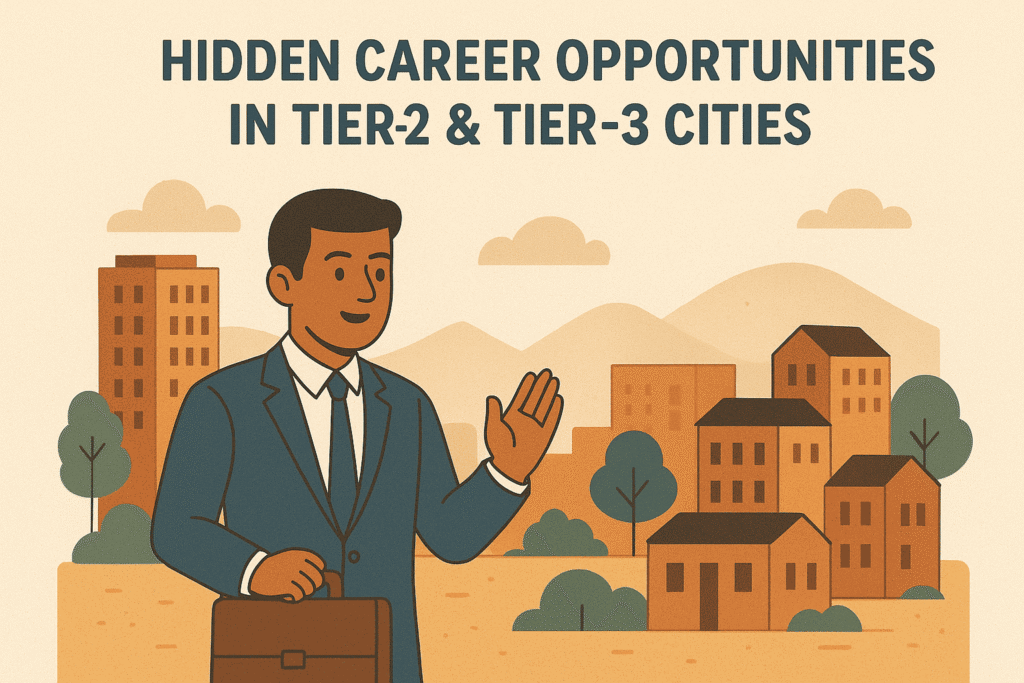
However, this trend is rapidly changing. With advancements in technology, a growing digital economy, and government initiatives to boost smaller towns, Tier-2 and Tier-3 cities are now emerging as new centers of career growth.
This shift represents an exciting opportunity for students, professionals, and entrepreneurs who may have once felt that success was only possible in big cities. Today, hidden career opportunities are thriving in smaller towns, creating an entirely new landscape of possibilities.
In this article, we will explore why Tier-2 and Tier-3 cities are becoming career hotspots, the industries driving this growth, and how you can tap into these opportunities for long-term success.
Understanding Tier-2 and Tier-3 Cities
Before diving deeper, let’s clarify what we mean by Tier-2 and Tier-3 cities.
- Tier-1 Cities: These are metro cities with highly developed infrastructure, global connectivity, and massive corporate presence. Examples: Bengaluru, Mumbai, Delhi, Hyderabad, and Chennai.
- Tier-2 Cities: These are medium-sized cities with good infrastructure, growing industries, and improving connectivity. Examples: Coimbatore, Indore, Bhubaneswar, Vizag, Lucknow, and Jaipur.
- Tier-3 Cities: These are smaller towns or semi-urban areas with emerging industries, local businesses, and gradually developing facilities. Examples: Guntur, Kurnool, Kolhapur, Madurai, and Siliguri.
Traditionally, Tier-2 and Tier-3 cities were considered secondary in career opportunities, but this perception is now outdated.
Why Smaller Cities Are Gaining Momentum
The shift of opportunities to Tier-2 and Tier-3 cities is not accidental — it is fueled by several factors working together.
1. Digital Transformation
With the rise of high-speed internet and widespread smartphone use, geography no longer limits access to knowledge or work.
- Remote work is now mainstream.
- Online businesses can be operated from anywhere.
- Students in smaller towns can access the same online courses and resources as those in metro cities.
This digital revolution has leveled the playing field, allowing talent to thrive regardless of location.
2. Government Initiatives and Policies
Various government programs are focusing on developing smaller towns:
- Startup India and Digital India encourage innovation and entrepreneurship beyond metros.
- Special Economic Zones (SEZs) are being established in Tier-2 cities to boost industries like IT and manufacturing.
- Skill development initiatives like Skill India aim to prepare the local workforce for modern careers.
These policies have created a supportive environment for job growth in smaller towns.
3. Lower Cost of Living
Life in metro cities can be expensive. High rents, travel costs, and daily expenses often eat into salaries.
In contrast, Tier-2 and Tier-3 cities offer:
- Affordable housing.
- Lower daily expenses.
- Less competition for basic resources like transportation and schooling.
This makes these cities attractive for companies looking to reduce operational costs and for individuals seeking a better work-life balance.
4. Reverse Migration
The COVID-19 pandemic triggered a reverse migration trend, where professionals returned to their hometowns to work remotely.
Many discovered that they could:
- Stay close to family.
- Save more money.
- Still build successful careers online or through hybrid roles.
As a result, demand for better infrastructure and career opportunities in smaller towns surged, encouraging companies to expand beyond metros.
Industries Thriving in Tier-2 and Tier-3 Cities
Several industries are leading the growth of hidden career opportunities in these emerging markets. Here are some key sectors to watch:
1. Information Technology (IT) and IT-Enabled Services (ITES)
While metros like Bengaluru remain IT powerhouses, companies are increasingly opening satellite offices in Tier-2 cities to tap into local talent pools.
Cities like Kochi, Trivandrum, Indore, and Vizag are becoming mini IT hubs, offering roles such as:
- Software development.
- Cloud services.
- Technical support.
- Cybersecurity and data analytics.
2. E-commerce and Logistics
The boom in online shopping has created massive demand for logistics networks, warehouses, and delivery services.
Tier-2 and Tier-3 cities are ideal for:
- Setting up warehouses due to lower land costs.
- Providing last-mile delivery solutions.
- Offering jobs in inventory management, packaging, and operations.
Major players like Amazon, Flipkart, and Meesho are expanding aggressively in these regions.
3. Healthcare and Telemedicine
The pandemic highlighted the need for strong healthcare infrastructure across India.
Smaller cities are now seeing growth in:
- Hospitals and clinics.
- Telemedicine services.
- Health-tech startups.
Doctors, nurses, medical technicians, and telehealth professionals are in high demand.
4. Education and EdTech
Online education platforms like Byju’s, Unacademy, and Vedantu have transformed learning in smaller towns.
At the same time, local coaching centers and schools are hiring teachers and trainers for:
- Competitive exam preparation.
- Digital literacy courses.
- Skill-based training programs.
This opens doors for educators and entrepreneurs alike.
5. Agritech and Rural Innovation
Agriculture remains a major part of India’s economy, but now it is being revolutionized by technology.
Startups are emerging in Tier-3 cities to:
- Improve crop yield through AI-driven tools.
- Streamline supply chains for farmers.
- Introduce sustainable practices.
This creates opportunities for agricultural engineers, marketing professionals, and technology specialists.
6. Tourism and Hospitality
With rising domestic travel, smaller cities and towns with cultural or natural attractions are becoming tourism hubs.
Career options include:
- Hotel management.
- Travel consultancy.
- Local guide services.
- Event planning.
7. Manufacturing and Industrial Growth
Government initiatives like Make in India are pushing companies to set up manufacturing units in cost-effective locations.
This has led to new opportunities in:
- Automobile production.
- Textile manufacturing.
- Electronics assembly.
Jobs in quality control, operations management, and skilled labor are plentiful.
8. Freelancing and Remote Work
Perhaps the most exciting development is the rise of freelance and remote work opportunities.
Professionals in Tier-2 and Tier-3 cities can now work with global clients in:
- Content writing.
- Graphic design.
- Software development.
- Digital marketing.
- Virtual assistance.
Platforms like Upwork, Fiverr, and Toptal connect local talent with international markets.
Benefits of Building a Career in Smaller Cities
Choosing to build your career in a Tier-2 or Tier-3 city comes with unique advantages.
1. Better Work-Life Balance
With shorter commute times, less traffic, and lower stress levels, professionals can maintain a healthier balance between work and personal life.
2. Financial Savings
Lower living costs allow you to save more or invest in assets like property.
This financial security is harder to achieve in expensive metros.
3. Closer Community Connections
Smaller towns often have stronger social bonds, offering a sense of belonging and support.
4. Leadership Opportunities
In emerging markets, there’s less competition for top roles.
Ambitious individuals can rise quickly in their careers.
How to Identify Hidden Opportunities
Finding career prospects in smaller towns requires strategy and research. Here’s how to get started:
1. Research Growing Industries
Use online platforms like LinkedIn, Naukri, and Indeed to track hiring trends.
Look for companies expanding into your target location.
2. Network Locally
Attend community events, business meetups, and government job fairs to connect with potential employers or collaborators.
3. Leverage Online Learning
Upskill yourself with platforms like Coursera, Udemy, and Skillshare to stay competitive, especially in digital fields.
4. Consider Remote-First Roles
Even if there are limited local companies, remote jobs can give you access to national and global markets.
Challenges to Overcome
While the future looks promising, there are challenges to consider:
- Infrastructure Gaps: Some Tier-3 towns may lack reliable internet or transportation systems.
- Limited Awareness: Many job seekers are unaware of opportunities outside metros.
- Skill Mismatch: Local talent may need additional training to meet modern job requirements.
These challenges can be addressed through government efforts, private investment, and individual upskilling.
The Future of Tier-2 and Tier-3 Career Growth
The next decade will likely see even more growth in these smaller cities.
Predictions include:
- Tech companies establishing AI and data hubs outside metros.
- Increased foreign investment in industrial corridors.
- Local entrepreneurship flourishing with government-backed funding.
- Widespread adoption of remote-first corporate cultures.
By 2030, many Tier-2 and Tier-3 cities will stand shoulder-to-shoulder with metros in terms of opportunities and infrastructure.
Conclusion
The days when success meant moving to a metro city are fading. Hidden career opportunities are flourishing in Tier-2 and Tier-3 cities, driven by digital transformation, government policies, and a shift in corporate strategies.
For ambitious individuals, these cities offer a unique chance to grow professionally while enjoying a higher quality of life. By leveraging online tools, upskilling, and local networking, you can build a thriving career without leaving your hometown.
The future belongs not just to the big cities, but to every corner of the nation where talent meets opportunity.
If you’re ready to think beyond traditional boundaries, now is the perfect time to explore the untapped potential of smaller cities and be part of India’s next growth story.