Careers in Data Privacy and Digital Rights Management: Safeguarding the Future of Digital Freedom |2025
In today’s fast-paced digital world, every action we take online—be it browsing a website, making a purchase, using social media, or streaming content—generates valuable data. This data fuels innovation and growth for businesses, but it also comes with serious risks, such as identity theft, cybercrime, and misuse of personal information. As technology continues to advance, data privacy and digital rights management (DRM) have emerged as critical fields that ensure the security and ethical use of digital assets.
For students and professionals seeking future-proof careers, this domain offers incredible opportunities to make a real difference in how technology is used while also enjoying high demand, competitive salaries, and global career prospects.
This article explores the world of careers in data privacy and digital rights management, covering essential skills, job roles, growth trends, and why this sector is more relevant than ever.
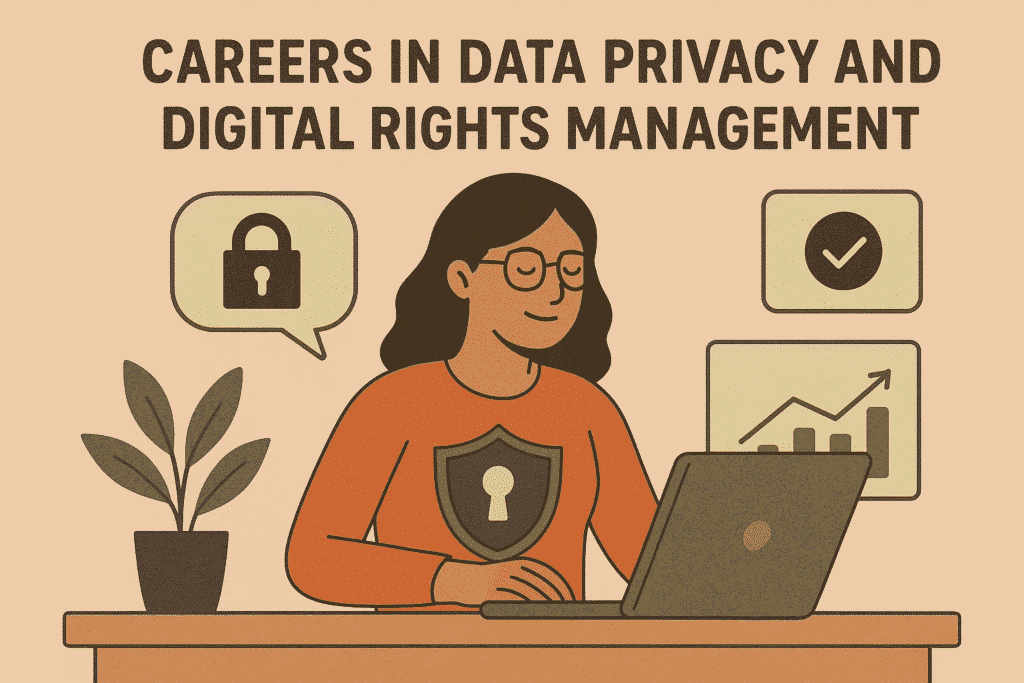
Understanding Data Privacy and Digital Rights Management
What is Data Privacy?
Data privacy refers to the protection of personal and sensitive information from unauthorized access or misuse. With data breaches making headlines regularly, companies and governments worldwide are under increasing pressure to ensure that personal data is stored, processed, and shared securely.
Examples of sensitive data include:
- Names, addresses, and phone numbers
- Social security or Aadhaar numbers
- Banking and credit card details
- Medical records
- Browsing history and location data
Laws such as GDPR (General Data Protection Regulation) in Europe, CCPA (California Consumer Privacy Act) in the US, and India’s Digital Personal Data Protection Act (DPDPA) highlight how crucial data privacy has become globally.
What is Digital Rights Management (DRM)?
Digital Rights Management is a technology-driven approach to controlling how digital content is accessed, used, and distributed. DRM plays a vital role in protecting intellectual property (IP) for creators and businesses.
For instance:
- Streaming platforms like Netflix use DRM to prevent illegal downloads of movies and shows.
- E-book publishers apply DRM to stop unauthorized copying of books.
- Software companies use DRM to prevent piracy.
In short, DRM ensures that creators and businesses retain control over their digital assets while protecting users’ rights.
Why Careers in Data Privacy and DRM are in High Demand
With the rise of digitalization, cybersecurity threats and data misuse have skyrocketed. According to reports, cybercrime is expected to cost the global economy $10.5 trillion annually by 2025. At the same time, intellectual property theft and illegal content distribution cause billions in losses each year.
Here are some reasons why this field is booming:
- Rising Cybersecurity Threats – Increasing cases of hacking, ransomware attacks, and phishing scams have made data privacy a top priority.
- Strict Global Regulations – Governments are enforcing stricter data protection laws, which require companies to hire privacy specialists and compliance officers.
- Explosion of Digital Content – With the growth of streaming services, online learning platforms, and gaming, DRM experts are needed to prevent content theft.
- Consumer Awareness – People are becoming more aware of their digital rights, pushing companies to invest in privacy tools and policies.
- Global Career Scope – Since privacy laws differ across countries, professionals with expertise in international data privacy are in high demand worldwide.
Top Careers in Data Privacy and Digital Rights Management
This domain offers diverse job opportunities ranging from legal compliance to technical implementation. Here are some of the most sought-after roles:
1. Data Privacy Officer (DPO)
- Role: Ensures compliance with data protection laws, develops privacy policies, and acts as a point of contact for regulatory bodies.
- Skills Required: Knowledge of privacy laws like GDPR and CCPA, legal writing, risk management, and communication skills.
- Average Salary: ₹8–25 LPA in India; $80,000–$160,000 in the US.
2. Privacy Analyst
- Role: Analyzes data flow within an organization to identify potential privacy risks and recommend solutions.
- Skills Required: Data mapping, reporting, analytical thinking, and understanding of compliance frameworks.
- Average Salary: ₹5–15 LPA in India; $60,000–$100,000 in the US.
3. Cybersecurity Specialist (Privacy Focus)
- Role: Focuses on implementing technical controls to secure sensitive data and prevent breaches.
- Skills Required: Ethical hacking, encryption techniques, network security, and cybersecurity certifications.
- Average Salary: ₹6–20 LPA in India; $70,000–$150,000 in the US.
4. Digital Rights Management Specialist
- Role: Manages systems that protect intellectual property and digital content from unauthorized access or piracy.
- Skills Required: Knowledge of DRM software, copyright laws, cloud-based content management systems, and licensing agreements.
- Average Salary: ₹7–18 LPA in India; $75,000–$140,000 in the US.
5. Legal Advisor – Data Privacy
- Role: Provides legal advice to companies on compliance with privacy and digital rights laws.
- Skills Required: Law degree with a focus on technology law, strong research and negotiation skills.
- Average Salary: ₹10–30 LPA in India; $90,000–$200,000 in the US.
6. Compliance Manager
- Role: Oversees privacy audits and ensures all company departments comply with privacy and DRM policies.
- Skills Required: Regulatory knowledge, leadership, reporting, and process management.
- Average Salary: ₹9–25 LPA in India; $80,000–$140,000 in the US.
Skills Needed for a Career in Data Privacy and DRM
To excel in this field, a mix of technical, legal, and soft skills is required.
Technical Skills
- Knowledge of cybersecurity tools and frameworks
- Encryption and data protection techniques
- DRM tools such as Adobe Content Server, Microsoft PlayReady
- Cloud computing security
- Data governance tools like OneTrust or BigID
Legal & Compliance Skills
- Understanding of global privacy laws (GDPR, HIPAA, DPDPA, etc.)
- Legal documentation and audit preparation
- Risk assessment and management
Soft Skills
- Analytical thinking
- Problem-solving
- Strong communication
- Ethical decision-making
- Collaboration with cross-functional teams
Educational Pathways
The great news is that you don’t necessarily need a computer science degree to enter this field. Here are some ways to get started:
- Undergraduate Degrees:
- Computer Science, Cybersecurity, Law, or Business Administration with a focus on technology.
- Certifications:
- CIPP (Certified Information Privacy Professional)
- CISM (Certified Information Security Manager)
- CISSP (Certified Information Systems Security Professional)
- CDPSE (Certified Data Privacy Solutions Engineer)
- Master’s Programs:
- Specialization in Data Privacy, Cyber Law, or Information Security Management.
- Short Courses:
- Online platforms like Coursera, Udemy, and LinkedIn Learning offer affordable training.
Future Trends in Data Privacy and DRM Careers
The future of this industry is exciting and full of potential. Here are some emerging trends to watch:
- AI-Powered Privacy Tools: Artificial Intelligence will help automate data protection processes.
- Blockchain for DRM: Blockchain technology will provide secure and transparent content tracking.
- Privacy by Design: Companies will integrate privacy considerations into products from the development stage.
- Global Privacy Consultants: As businesses expand globally, experts who understand multiple privacy laws will be in demand.
- Metaverse and VR Protection: With virtual worlds growing, DRM will extend to digital avatars and virtual goods.
How to Start Your Career
- Identify Your Strengths: Decide whether you want to focus on technical security, legal compliance, or digital content management.
- Get Relevant Certifications: Build credibility through recognized certifications.
- Internships and Entry-Level Roles: Gain experience through internships in IT, law firms, or compliance departments.
- Stay Updated: Follow privacy news, join online forums, and attend webinars.
- Build a Portfolio: Showcase projects, audits, or reports you’ve worked on to attract employers.
Why This Career Matters
Data privacy and DRM aren’t just about jobs—they’re about safeguarding digital freedom. Every time you protect a customer’s data or prevent piracy, you’re making the digital world safer and more ethical.
In a time when people’s personal data is at risk and creators struggle to control their intellectual property, your work in this field can have a global impact.
By pursuing a career in this domain, you’ll not only secure a bright future for yourself but also contribute to building a trustworthy digital ecosystem.
Global Career Opportunities and Cross-Border Relevance
One of the most exciting aspects of pursuing a career in data privacy and DRM is its global demand. With data being exchanged across borders every second, privacy experts and DRM professionals are needed in every country and industry.
For example, a multinational company operating in India, Europe, and the United States must comply with multiple privacy laws simultaneously:
- GDPR in Europe
- CCPA in California, USA
- DPDPA in India
This means businesses need global privacy specialists who understand how to align their policies with various regulatory requirements. Such expertise makes you a highly valuable asset with opportunities to work internationally, either on-site or remotely.
Additionally, as e-commerce and digital services grow, even small startups must protect their data and content. This creates opportunities for privacy consultants and DRM experts to freelance or build their own firms, providing services to a range of clients worldwide.
Impact Beyond Technology
Working in data privacy and DRM isn’t limited to tech companies. Today, almost every sector relies on secure data management:
- Healthcare: Protecting patient records and medical histories.
- Education: Safeguarding student data on online learning platforms.
- Entertainment: Securing streaming platforms and preventing movie piracy.
- Finance: Preventing fraud and ensuring safe online banking transactions.
This means your skills will always stay relevant, regardless of industry trends.
By combining technical knowledge, legal expertise, and ethical responsibility, you can build a career that not only provides financial stability but also contributes to creating a safer, more transparent digital world.
Conclusion
The rise of data breaches, cybercrimes, and intellectual property theft has created a massive demand for professionals who can protect digital information and rights. Careers in data privacy and DRM offer exciting opportunities for those who want to combine technology, law, and ethics into one impactful career path.
Whether you’re a student planning your future or a professional seeking a career change, now is the perfect time to enter this field. With the right skills, certifications, and passion, you can become a key player in shaping the future of digital trust and security.
Table of Contents
follow us on whatsapp channel