
Green Jobs: Careers in Renewable Energy & Sustainability for Students |2025
The world is changing at a rapid pace. Climate change, global warming, and environmental degradation have become some of the biggest challenges of our time. As governments, companies, and individuals increasingly focus on sustainability, a new wave of career opportunities is emerging — green careers jobs.
For students and young professionals, green jobs represent a chance to make a positive impact on the planet while building a rewarding career. With the renewable energy sector expanding at record speed, now is the perfect time to explore this field.
This comprehensive guide will help you understand what green jobs are, why they matter, and how you can build a successful career in renewable energy and sustainability.
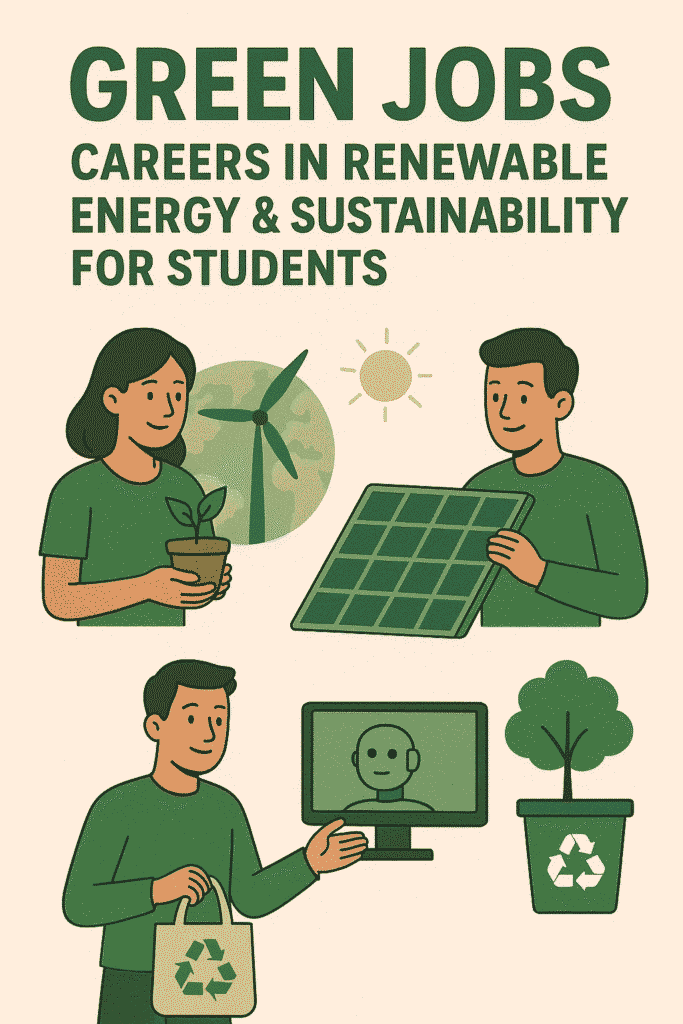
What Are Green Jobs?
Green jobs are roles that contribute to preserving or restoring the environment. They focus on reducing carbon footprints, conserving natural resources, and developing sustainable solutions.
The International Labour Organization (ILO) defines green jobs as positions that:
- Reduce consumption of energy and raw materials.
- Limit greenhouse gas emissions.
- Minimize waste and pollution.
- Protect and restore ecosystems.
Simply put, green jobs combine innovation, technology, and environmental care to create a better future for the planet.
Why Green Jobs Are Growing Rapidly
The demand for green jobs has skyrocketed in recent years due to several global trends:
1. Climate Change Awareness
With rising sea levels, extreme weather events, and loss of biodiversity, there is a growing urgency to address climate change. Governments and corporations are investing heavily in renewable energy and sustainability projects.
2. Global Commitments and Policies
International agreements like the Paris Climate Accord have set ambitious targets for reducing carbon emissions.
Countries worldwide are adopting policies to:
- Transition to clean energy sources.
- Reduce dependence on fossil fuels.
- Promote green infrastructure.
3. Technological Advancements
Innovations in solar, wind, electric vehicles (EVs), and battery storage have made renewable energy cheaper and more accessible. This has opened doors to a wide range of new job opportunities.
4. Corporate Sustainability Goals
Many companies now have dedicated ESG (Environmental, Social, and Governance) teams to meet sustainability targets. This has created demand for professionals with skills in green practices and compliance.
Top Sectors for Green Careers
Here are some of the fastest-growing sectors within renewable energy and sustainability, offering exciting career paths for students:
1. Solar Energy
The solar industry is booming worldwide. From installing rooftop panels to designing large solar farms, there’s a huge need for skilled professionals.
Roles in Solar Energy:
- Solar Panel Installer
- Solar Energy Engineer
- Solar Project Manager
- Solar Sales Consultant
Why it’s in demand:
Solar is now one of the cheapest sources of electricity, making it a key driver of the clean energy revolution.
2. Wind Energy
Wind energy is another rapidly expanding field. Countries like the US, China, and India are investing heavily in wind farms.
Roles in Wind Energy:
- Wind Turbine Technician
- Mechanical Engineer (Wind Systems)
- Wind Farm Project Manager
- Environmental Analyst for Wind Projects
Why it’s in demand:
Wind power produces zero emissions and has become essential for sustainable electricity generation.
3. Sustainable Architecture & Green Construction
The construction industry is responsible for a significant portion of global carbon emissions. Green building practices aim to reduce environmental impact through energy-efficient designs.
Roles in Green Construction:
- Sustainable Architect
- Environmental Consultant
- Green Building Project Manager
- LEED Certification Specialist
Why it’s in demand:
Cities are adopting smart infrastructure and eco-friendly designs to meet sustainability goals.
4. Electric Vehicles (EVs) and Clean Transportation
The shift towards electric cars, buses, and bikes has created a wave of opportunities in clean transportation.
Roles in EV Sector:
- Battery Technology Engineer
- EV Charging Infrastructure Designer
- Automotive Software Engineer (for EVs)
- Sustainable Logistics Analyst
Why it’s in demand:
Governments are offering incentives to accelerate EV adoption, creating a rapidly growing market.
5. Waste Management and Recycling
Proper waste management is critical to environmental sustainability. Careers in this field focus on reducing landfill waste and improving recycling systems.
Roles in Waste Management:
- Waste Reduction Specialist
- Recycling Program Manager
- Sustainability Officer in Corporates
- Environmental Health and Safety (EHS) Specialist
Why it’s in demand:
Urbanization has increased waste levels, and governments need experts to manage the crisis.
6. Environmental Policy and Research
Not all green careers are technical. There’s also a need for policy makers, educators, and researchers.
Roles in Environmental Policy:
- Environmental Scientist
- Climate Change Analyst
- Policy Advisor
- Sustainability Consultant
Why it’s in demand:
Data-driven policies are essential for shaping long-term sustainable growth.
Skills Students Need for Green Careers
To thrive in this field, students must develop a combination of technical knowledge, soft skills, and industry expertise.
1. Technical Skills
- Renewable energy systems (solar, wind, hydro).
- Data analysis and environmental modeling.
- Green building certifications like LEED.
- Knowledge of sustainable materials.
2. Soft Skills
- Problem-solving and critical thinking.
- Communication and teamwork.
- Adaptability in a fast-changing industry.
3. Certifications and Courses
Consider certifications to boost your employability:
- Solar Energy Engineering (Coursera)
- Environmental Management System (EMS)
- LEED Green Associate Certification
- Sustainability and Climate Risk (SCR)
Education Pathways for Green Careers
You don’t always need a specialized degree to enter this field. Here are some options:
1. Engineering Degrees
- Mechanical Engineering
- Electrical Engineering
- Civil Engineering with a focus on green infrastructure
2. Environmental Science Programs
- Bachelor’s or Master’s in Environmental Science
- Courses focused on climate change and conservation
3. Short-Term Certifications
- Solar installation training
- Energy auditing
- Environmental law and compliance
How Students Can Get Started
If you’re a student looking to break into the renewable energy and sustainability space, here’s a step-by-step roadmap:
Step 1: Identify Your Interest Area
- Love technology? → Consider solar, wind, or EV careers.
- Passionate about policy and education? → Look into research or environmental law.
- Interested in design? → Explore sustainable architecture.
Step 2: Build Relevant Skills
Take online courses, attend workshops, and gain hands-on experience through internships or college projects.
Step 3: Gain Practical Experience
- Volunteer for local environmental NGOs.
- Work on campus sustainability projects.
- Apply for internships with renewable energy companies.
Step 4: Network with Professionals
Join industry groups, LinkedIn communities, and sustainability conferences to connect with experts.
Step 5: Apply for Green Jobs
Look for opportunities on platforms like:
- LinkedIn Jobs
- Indeed
- Sustainability-focused portals like GreenJobs.com
Salary Expectations in Green Careers
Green jobs not only offer purpose-driven work but also competitive salaries.
| Role | Average Salary (India) | Average Salary (Global) |
|---|---|---|
| Solar Panel Installer | ₹2.5 – ₹4 LPA | $35,000 – $45,000 |
| Wind Turbine Technician | ₹3 – ₹5 LPA | $40,000 – $55,000 |
| Sustainability Consultant | ₹5 – ₹10 LPA | $50,000 – $80,000 |
| Environmental Scientist | ₹4 – ₹7 LPA | $45,000 – $70,000 |
| EV Engineer | ₹6 – ₹12 LPA | $60,000 – $90,00 |
The Future of Green Careers
The future of green jobs is incredibly promising. According to the International Renewable Energy Agency (IRENA):
- By 2030, the renewable energy sector could create 38 million jobs worldwide.
- Solar and wind will account for the majority of these opportunities.
- The shift toward net-zero emissions will continue to drive demand for sustainability experts.
For students, this means long-term job security and growth potential.
Why Students Should Consider Green Careers
Choosing a green career isn’t just about finding a job — it’s about making a difference.
Here’s why students should consider entering this field:
- Purpose-Driven Work: Your efforts directly contribute to fighting climate change.
- High Demand: Companies and governments need skilled green professionals.
- Innovation Opportunities: You’ll work on cutting-edge technologies.
- Global Career Scope: These skills are relevant worldwide.
- Future-Proof Job Market: As sustainability becomes a priority, these roles will continue to grow.
Final Thoughts
Green jobs are no longer just a niche — they are becoming mainstream career options for the next generation.
As the world transitions to clean energy and sustainable practices, the demand for skilled professionals will only increase.
For students, this is an incredible opportunity to build a high-impact, future-proof career. Whether you’re interested in engineering, policy, design, or research, there’s a green job waiting for you.
By investing in the right skills and education today, you can become part of the global movement to save the planet while securing your own professional success.
Table of Contents
Follow us on whatsapp channel