
The Untapped Careers in Local Languages: Regional Content Creation, Translation, and AI Training | Empower in 2025
In today’s rapidly digitizing world, language is power. While English has long been considered the dominant language in business and technology, the digital revolution is changing this narrative. With billions of non-English speakers worldwide, there’s an increasing demand for regional and local language content across industries.
From translation services to regional content creation and AI language training, exciting new career opportunities are emerging—many of which are still underrated and untapped.
Whether you’re a student, freelancer, or professional looking for a career shift, these fields offer immense growth potential, flexibility, and a chance to make an impact in the global marketplace.
Why Local Language Careers Are Rising in Demand
The world is becoming more connected, but people still prefer to consume content in their native language. According to a recent study:
- 75% of online users are more likely to purchase products from websites in their local language.
- 60% of people rarely or never buy from English-only websites.
- Regional language internet users are growing faster than English-speaking users in countries like India, China, and Indonesia.
Here are the key factors driving this demand:
1. Digital Inclusion
As smartphones and affordable internet access reach rural and semi-urban areas, millions of first-time internet users are coming online. These users want apps, websites, and services in their native language, creating a massive demand for localized content.
2. Rise of Regional OTT and Entertainment Platforms
Streaming platforms like Netflix, Amazon Prime Video, and regional platforms such as Hotstar, SonyLIV, and Aha are investing heavily in regional movies, web series, and shows.
This has increased the need for:
- Subtitles
- Dubbing
- Script translation
- Regional marketing campaigns
3. AI and Language Models
The explosion of AI-driven tools and chatbots has created a new industry for language trainers and annotators. AI systems need to understand local languages accurately, which requires massive amounts of data labeling and training by human experts.
4. Government and Corporate Push for Localization
Governments and corporations are prioritizing multilingual policies.
For example:
- The Indian government’s Digital India initiative promotes regional language adoption in tech services.
- E-commerce giants like Amazon and Flipkart have multilingual interfaces to attract rural and regional customers.
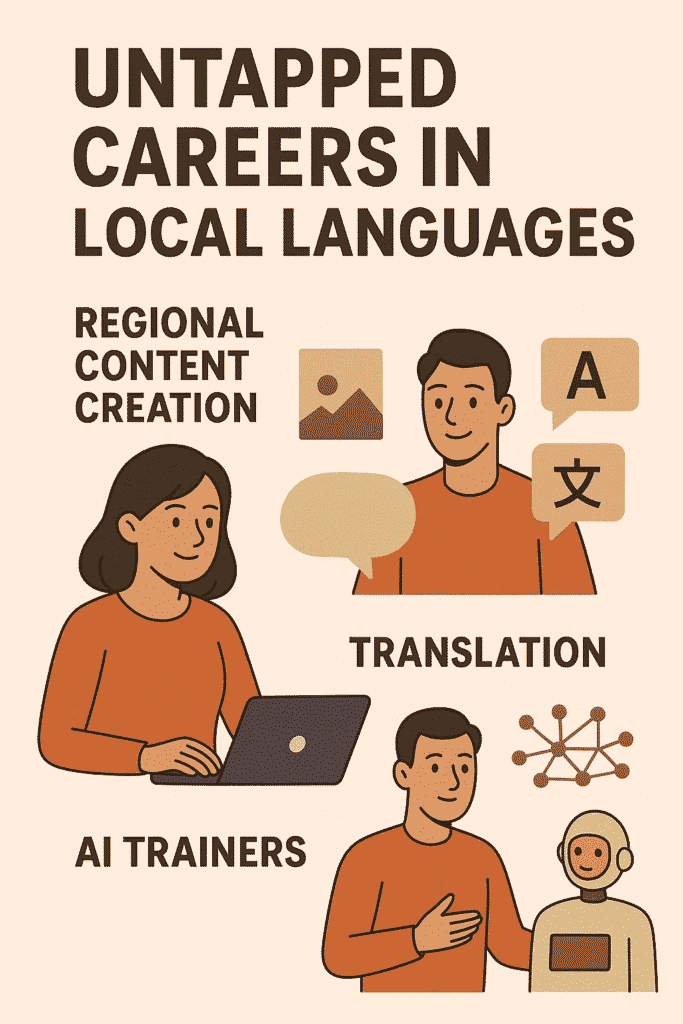
Career Path 1: Regional Content Creation
Regional content creation is one of the most promising career paths for those fluent in a local language. It involves creating digital content—videos, blogs, podcasts, and social media posts—in regional languages.
Roles in Regional Content Creation:
- Regional Content Writer: Writing blogs, website content, and social media posts in native languages like Hindi, Telugu, Tamil, Bengali, Marathi, and others.
- Video Content Creator: Producing YouTube videos, Instagram reels, or educational content in a specific language.
- Regional Influencer: Building a personal brand and promoting local products or services.
- Community Manager: Managing online communities and forums in regional languages.
Skills Required:
- Strong command of the regional language (grammar, vocabulary, and fluency).
- Creativity and storytelling ability.
- Understanding of digital platforms like YouTube, Facebook, Instagram, and LinkedIn.
- Basic knowledge of SEO for content optimization.
- Optional: Video editing and graphic design skills.
Earning Potential:
Regional content creators can earn through:
- Freelancing – ₹10,000 to ₹50,000 per month (entry-level)
- Full-time positions – ₹3 to ₹8 LPA (India)
- YouTube or influencer marketing – Earnings vary based on audience size and sponsorships.
Career Growth Example:
Consider a Telugu-speaking content creator:
- Start: Writing regional blog posts for small businesses.
- Growth: Building a niche YouTube channel focused on career guidance in Telugu.
- Scale: Collaborating with brands, launching courses, and creating premium content.
Career Path 2: Translation and Localization
Translation careers have been around for decades, but the digital era has redefined their scope. Today, translation goes beyond books and documents—it’s about making technology accessible to diverse audiences.
Industries Hiring Translators:
- E-commerce: Translating product listings for platforms like Amazon, Flipkart, and Meesho.
- Healthcare: Translating medical documents, prescriptions, and training material.
- Education: Localizing online courses, textbooks, and e-learning platforms.
- Entertainment: Subtitling and dubbing for movies, series, and video games.
- Legal: Translating legal agreements and contracts.
Types of Translation Work:
- General Translation: Everyday content like blogs, ads, and articles.
- Technical Translation: Specialized documents like software manuals or engineering papers.
- Legal Translation: Contracts, laws, and government notices.
- Medical Translation: Reports, prescriptions, and patient instructions.
- Subtitling and Dubbing: Scripts for OTT content and films.
Skills Required:
- Proficiency in two languages: the source and target language.
- Cultural understanding to ensure accurate localization.
- Attention to detail and grammar expertise.
- Familiarity with CAT tools (Computer-Assisted Translation) like SDL Trados or MemoQ.
- Time management for meeting strict deadlines.
Earning Potential:
- Freelance translators: ₹20,000–₹60,000 per month based on projects.
- Full-time translation roles: ₹3–₹9 LPA in India.
- Global freelance projects: $10–$30 per hour.
How to Start a Translation Career:
- Choose a specialization (medical, legal, technical, etc.).
- Build a portfolio with sample translations.
- Register on freelance platforms like Upwork, Fiverr, or TranslatorsCafe.
- Network with companies offering regional services.
- Upskill through certifications like Certified Translation Professional (CTP).
Career Path 3: AI Language Training and Annotation
AI-driven companies like OpenAI, Google, and Microsoft are constantly training their systems to understand different languages, accents, and dialects. This has given rise to a completely new career path: AI language trainer or annotator.
What Does an AI Language Trainer Do?
AI trainers work behind the scenes to teach machines how to process human language.
Their tasks include:
- Labeling data sets (audio, text, video) in regional languages.
- Reviewing AI-generated translations and correcting errors.
- Providing real-life examples to help AI understand context and slang.
- Testing chatbots or voice assistants like Alexa or Siri in native languages.
Skills Required:
- Native-level fluency in a regional language.
- Basic computer skills and attention to detail.
- Patience and accuracy while working with repetitive tasks.
- Optional: Familiarity with data annotation tools.
Companies Hiring for This Role:
- Big Tech: Google, Microsoft, Amazon, Meta.
- AI Startups: Companies working on voice recognition, NLP, and localization.
- Freelance Platforms: Websites like Appen, Clickworker, and TELUS International.
Earning Potential:
- Entry-level freelancers: ₹15,000–₹40,000 per month.
- Full-time positions: ₹3–₹7 LPA in India.
- Specialized annotators: Higher salaries with niche expertise.
Why These Careers Are Still Untapped
Despite the growing demand, local language careers are still underrated. Here’s why:
- Lack of awareness: Many people are unaware these jobs exist.
- Limited training resources: Few formal courses teach translation or AI annotation.
- Perception issues: These roles are sometimes viewed as “low-tech” or supplementary jobs.
- Fragmented market: Opportunities are spread across industries, making them harder to find.
Steps to Build a Successful Career in Local Languages
If you’re ready to dive into this emerging field, here’s a roadmap to get started:
Step 1: Identify Your Strengths
- Are you a creative storyteller? → Try content creation.
- Do you enjoy precise, structured work? → Consider translation.
- Are you comfortable with tech and repetitive tasks? → Explore AI training.
Step 2: Upskill
- Take online courses on platforms like Coursera, Udemy, or LinkedIn Learning.
- Join language-specific communities and forums.
- Consider certifications in translation or AI annotation.
Step 3: Build a Portfolio
- Start with small projects or volunteer work.
- Showcase your work on LinkedIn or a personal website.
- Collect testimonials and case studies to build credibility.
Step 4: Find Opportunities
- Freelance websites like Upwork, Fiverr, and Appen.
- Job portals like LinkedIn, Indeed, and Naukri.
- Networking through social media and regional language groups.
Step 5: Stay Updated
- Follow industry trends in AI, content marketing, and localization.
- Experiment with emerging tools like AI-powered translation software.
- Continuously improve your skills as demand grows.
Future Outlook
The future for local language careers looks extremely promising. According to reports:
- The Indian language translation industry alone is expected to grow at 18% annually.
- By 2030, AI-powered language services will become a multi-billion-dollar global industry.
- Regional content will dominate e-commerce, entertainment, and education sectors.
As more companies go global, they’ll need human expertise to bridge the language gap, even with advanced AI tools.
Final Thoughts
In an increasingly digital and interconnected world, language is more than just communication it’s a career opportunity.
Whether you choose regional content creation, translation, or AI language training, you’ll be entering industries with explosive growth potential and a chance to shape how technology interacts with diverse cultures.
These careers are perfect for those who value creativity, cultural preservation, and global impact, all while earning a sustainable income.
If you have a strong command of your native language, now is the time to tap into these opportunities and position yourself for success in the digital age.
Table of Contents
follow us on whats app channel