
How Rural Students Can Build Global Careers Using Remote Work Now | 2025
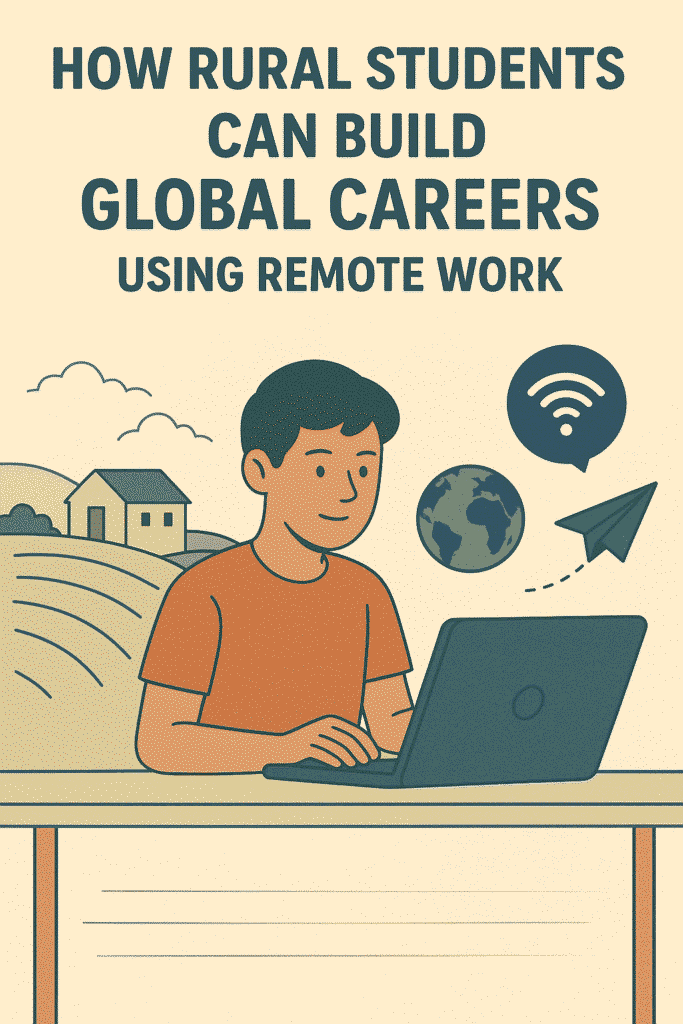
In today’s rapidly evolving world, geography no longer limits career opportunities. A student living in a small rural town can now work for an international company, collaborate with teams across the globe, and earn a competitive salary — all without leaving their home. This revolution has been made possible by remote work.
For rural students, remote work is not just a trend; it’s a life-changing opportunity. It allows them to overcome barriers like lack of infrastructure, limited access to high-paying jobs, and fewer local opportunities. By embracing remote work, students in rural areas can connect with the global economy, gain exposure to diverse cultures, and build successful careers that were once thought impossible.
In this comprehensive guide, we’ll explore how rural students can take advantage of remote work to build global careers. We’ll cover the benefits of remote jobs, strategies for skill-building, tools for success, and how to compete effectively in a digital world.
The Rise of Remote Work
The concept of remote work has been around for years, but it became mainstream after the COVID-19 pandemic. During lockdowns, companies were forced to shift their operations online. What started as a temporary measure soon became a permanent work model for many organizations.
According to recent reports, the global remote workforce is expected to grow by 25% every year, and by 2030, nearly half of the world’s workforce will be working remotely in some capacity.
Several industries now actively hire remote workers, including:
- Information Technology (IT)
- Digital Marketing
- Customer Support
- Education and E-Learning
- Content Writing and Creative Services
- Data Science and Analytics
- Virtual Assistance
- Software Development
- Design and Multimedia
This trend is particularly beneficial for rural students, who may not have access to large corporations or industries in their hometowns.
Why Remote Work is a Game-Changer for Rural Students
For students living in rural or semi-urban areas, there are often unique challenges: limited job opportunities, lack of access to advanced education, poor infrastructure, and fewer networking options. Remote work offers a solution to these problems in several ways:
1. Access to Global Opportunities
Through remote work, rural students can apply for jobs anywhere in the world. Whether the company is based in the U.S., Europe, or Asia, geographical boundaries no longer matter. This creates a level playing field where talent and skills matter more than location.
2. Financial Independence
Working remotely allows students to earn a decent income while still living in low-cost rural areas. This means they can save more money and support their families without having to move to expensive cities.
3. Flexibility in Learning and Earning
Many remote jobs offer flexible schedules. This allows students to balance their studies while gaining work experience, making it easier to transition into full-time careers after graduation.
4. Exposure to Global Cultures
Collaborating with teams from different countries improves communication skills and broadens perspectives. Rural students can develop a global mindset that is highly valued by employers.
5. Reduced Migration Pressure
Traditionally, students had to migrate to urban areas or even abroad to find good jobs. Remote work reduces the need for this migration, helping rural communities retain talent and grow economically.
Skills Rural Students Need for Remote Careers
While remote work provides opportunities, students need the right skills to compete globally. Here are some essential skill categories:
1. Digital Literacy
Digital literacy is the foundation of remote work. It includes basic computer skills, internet navigation, using email effectively, and familiarity with digital tools like Google Workspace or Microsoft Office.
2. Technical Skills
Depending on the chosen career path, students may need specialized technical skills such as:
- Programming languages like Python, Java, or JavaScript.
- Data analysis and visualization.
- Graphic design using tools like Adobe Photoshop or Canva.
- Digital marketing skills like SEO, social media management, and Google Ads.
- Content creation, writing, or video editing.
These skills are in high demand across global industries.
3. Soft Skills
Remote work requires strong communication and interpersonal skills, especially when working with international teams. Important soft skills include:
- Time management and self-discipline.
- Problem-solving and adaptability.
- Cross-cultural communication.
- Critical thinking and creativity.
4. Language Proficiency
English remains the dominant language for global work. Improving English speaking and writing skills can significantly boost job prospects. Students can use free resources like YouTube tutorials, online courses, and language learning apps to practice.
Steps to Build a Global Remote Career
Here’s a step-by-step guide for rural students to get started:
Step 1: Identify Your Career Path
The first step is to figure out which industry or role suits your interests and strengths. Some popular remote-friendly careers include:
- Software Developer
- Digital Marketer
- Content Writer
- Data Analyst
- Virtual Assistant
- Online Tutor
- UX/UI Designer
Choosing a focused path helps you plan your skill-building journey more effectively.
Step 2: Build Your Skills
Thanks to the internet, high-quality education is available for free or at a low cost. Platforms like Coursera, Udemy, Khan Academy, and freeCodeCamp offer online courses on almost every topic.
For example:
- Learning coding? Try freeCodeCamp or Codecademy.
- Interested in marketing? HubSpot and Google Digital Garage have free courses.
- Want to improve design skills? Canva and Figma offer tutorials and practice projects.
Consistency is key. Dedicate at least 2-3 hours daily to skill-building.
Step 3: Create an Online Portfolio
An online portfolio showcases your abilities to potential employers.
For instance:
- Writers can create a blog with sample articles.
- Designers can upload their work on platforms like Behance or Dribbble.
- Developers can use GitHub to share projects.
Having a portfolio makes you stand out and builds trust with employers.
Step 4: Gain Experience Through Freelancing
Before landing a full-time remote job, freelancing can help you gain practical experience.
Popular freelancing platforms include:
- Upwork
- Fiverr
- Freelancer
- Toptal (for advanced professionals)
Start with small projects to build ratings and client feedback. Over time, you can increase your rates and move to higher-paying jobs.
Step 5: Apply for Remote Jobs
Once you’ve gained some experience, start applying for remote jobs.
Some popular job boards for remote work are:
- We Work Remotely
- Remote OK
- FlexJobs
- AngelList (for startups)
Make sure your resume highlights remote-friendly skills like self-management, communication, and proficiency with collaboration tools.
Step 6: Master Remote Collaboration Tools
Companies rely on digital tools for managing teams and projects. Familiarize yourself with tools like:
- Zoom for meetings.
- Slack for communication.
- Trello or Asana for project management.
- Google Workspace for collaboration.
Knowing these tools will make you job-ready from day one.
Step 7: Keep Upgrading Skills
The global job market is constantly evolving. Stay updated with new technologies and trends by:
- Joining online communities.
- Attending webinars and virtual conferences.
- Following industry experts on LinkedIn and Twitter.
Continuous learning ensures long-term career growth.
Overcoming Challenges in Rural Areas
While the opportunities are immense, rural students may face challenges like poor internet connectivity or lack of guidance. Here’s how to tackle them:
Limited Internet Access
- Use mobile hotspots or public Wi-Fi spaces like libraries.
- Download study materials when connected to the internet to access offline later.
Lack of Mentorship
- Join online forums, LinkedIn groups, or Facebook communities related to your field.
- Attend free mentorship programs offered by NGOs and tech companies.
Financial Constraints
- Opt for free courses and certifications before investing in paid programs.
- Look for scholarships or remote internships that pay stipends.
Inspiring Success Stories
Many rural students have already built successful global careers through remote work. For example:
- A student from a small village in India became a top-rated freelancer on Upwork, earning enough to support his family and pay for further education.
- Another student from rural Africa learned coding through free online courses and now works as a remote developer for a U.S.-based company.
- A young woman from a rural area built a career as a virtual assistant, working with international clients and mentoring others in her community.
These stories prove that determination, skills, and access to technology can change lives.
The Future of Remote Work
The future looks promising for remote workers, especially for students in rural areas. Emerging trends include:
- AI-Powered Work Platforms: Simplifying job searches and client interactions.
- Virtual Reality (VR) Collaboration: Making remote teamwork more immersive.
- Global Talent Pools: Companies will actively seek diverse talent worldwide.
By staying adaptable and continuously upgrading skills, rural students can thrive in this evolving landscape.
Conclusion
For rural students, remote work is a bridge to the global economy. It breaks down barriers of geography, infrastructure, and limited local opportunities, allowing students to build careers that compete on a worldwide scale.
The journey may begin with a single online course or a small freelancing project, but with dedication and consistent effort, rural students can achieve financial independence, gain international exposure, and inspire others in their communities.
The digital revolution has created a world where your location no longer defines your potential. All you need is a laptop, an internet connection, and the drive to succeed. With these tools, the world truly becomes your workplace.
Table of Contents
follow us on whatsapp channel