
The Future of Education in the Age of AI Tutors | empower Today 2025
Education has always been a cornerstone of human progress. From ancient times, when knowledge was passed down orally by elders and scholars, to modern classrooms filled with books and computers, learning has continually evolved. Today, we stand at the threshold of a new educational revolution, driven by the power of Artificial Intelligence (AI).
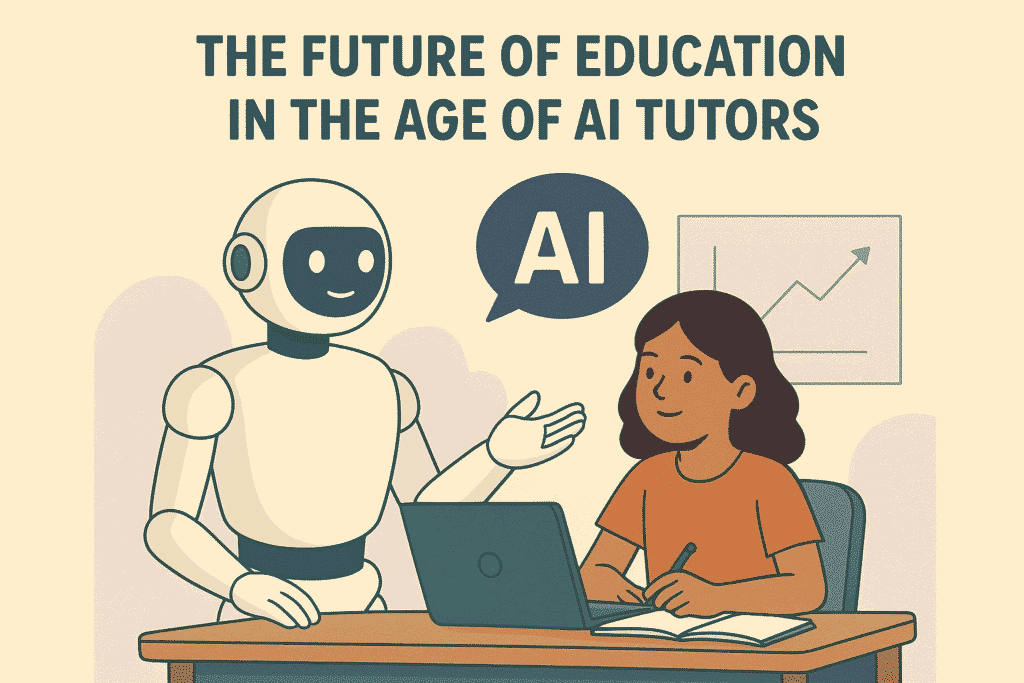
One of the most exciting developments in this transformation is the rise of AI tutors — intelligent systems capable of providing personalized guidance and learning experiences to students around the world. As AI technology advances, it is reshaping the way we teach, learn, and prepare for the future.
This article explores the potential of AI tutors, how they are changing education, the benefits and challenges they bring, and what the future might look like in a world where AI plays a central role in learning.
The Evolution of Education
To understand the significance of AI tutors, we need to look back at how education has evolved.
- In early civilizations, education was informal, with knowledge passed down through storytelling and apprenticeships.
- The invention of writing and books allowed structured learning and record-keeping.
- The Industrial Revolution brought standardized schooling to meet the needs of growing economies.
- The late 20th century saw the rise of computers and the internet, making education more accessible globally.
Now, in the 21st century, AI is emerging as the next major shift, promising to revolutionize education just as profoundly as the printing press or the internet once did.
What Are AI Tutors?
An AI tutor is an intelligent digital system designed to assist students in learning. Unlike traditional teaching tools, AI tutors can adapt to each student’s needs, offering real-time feedback and customized lessons.
These systems use machine learning algorithms, natural language processing, and data analytics to understand how a student learns best. They can then:
- Identify strengths and weaknesses.
- Adjust the difficulty level of lessons.
- Provide explanations in different ways until the concept is understood.
- Track progress over time.
Some popular examples already in use include platforms like Duolingo, Khan Academy’s AI tools, and ChatGPT-based learning assistants. While these tools are still developing, they offer a glimpse of the immense potential AI holds for education.
How AI Tutors Are Changing Education
The rise of AI tutors is bringing significant changes to how education works. Here’s how they are reshaping the learning landscape:
1. Personalized Learning for Every Student
Traditional classrooms often struggle to meet the diverse needs of students. Some learners excel quickly, while others need more time and support.
AI tutors solve this problem by tailoring lessons to each individual. For example:
- If a student struggles with math, the AI can provide additional practice exercises and step-by-step explanations.
- If a student is ahead of the class, the AI can introduce advanced concepts to keep them engaged.
This personalized approach ensures that no student is left behind.
2. 24/7 Availability
Unlike human teachers, AI tutors are available around the clock. This is especially helpful for students in rural areas or those with irregular schedules.
For instance:
- A student in a remote village can access the same quality of education as someone in a major city.
- Working students can study at night or on weekends without worrying about teacher availability.
Education becomes truly accessible when there are no time or location barriers.
3. Instant Feedback and Support
In traditional classrooms, students often wait days or weeks to receive feedback on assignments or tests. With AI tutors, feedback is instant.
This helps students:
- Understand mistakes immediately.
- Correct errors before they become habits.
- Gain confidence through quick progress tracking.
For teachers, this also means less time spent grading and more time focused on mentoring.
4. Reducing Educational Inequality
Around the world, millions of children lack access to quality teachers or educational resources. AI tutors can help bridge this gap.
For example:
- Students in underserved communities can access lessons and guidance through affordable devices.
- AI-driven platforms can translate lessons into local languages, making learning inclusive and equitable.
This democratization of education could be one of the most significant impacts of AI.
5. Supporting Teachers, Not Replacing Them
There’s a common fear that AI will replace human teachers. However, the reality is different.
AI tutors are best seen as partners to educators, handling repetitive tasks like grading, test preparation, and basic instruction.
This frees up teachers to:
- Focus on emotional and social development.
- Build deeper relationships with students.
- Guide students in critical thinking and creativity.
In other words, AI takes care of the “what” of education, while teachers focus on the “why” and “how.”
The Benefits of AI Tutors
AI tutors bring several advantages to both students and educators.
For Students:
- Customized learning paths based on their pace and style.
- Affordable access to high-quality education.
- Confidence-building through consistent progress tracking.
- Ability to learn anytime, anywhere without geographical limitations.
For Teachers:
- Reduced administrative workload, such as grading or lesson planning.
- Data-driven insights into student performance and engagement.
- More time for creative teaching and mentorship.
- Tools to identify struggling students early and intervene effectively.
Real-World Applications of AI Tutors
AI tutors are already making a difference in various areas of education.
- Language Learning: Apps like Duolingo use AI to personalize lessons for each user, helping millions learn new languages efficiently.
- STEM Education: Platforms like Khan Academy and Coursera use AI algorithms to recommend courses and practice exercises.
- Special Needs Education: AI can adapt lessons for students with disabilities, such as dyslexia or autism, making education more inclusive.
- Exam Preparation: AI-driven test prep tools offer simulated exams and personalized study plans for competitive tests like SATs or GREs.
These real-world applications prove that AI tutors are not just futuristic concepts — they are here today, transforming lives.
Challenges and Concerns with AI Tutors
While the potential is enormous, there are also challenges to address.
1. Access to Technology
Not every student has access to reliable internet or digital devices. This digital divide must be bridged to ensure AI-driven education reaches everyone.
2. Data Privacy and Security
AI tutors rely on collecting student data to personalize learning. Protecting this sensitive information is crucial to prevent misuse or breaches.
3. Over-Reliance on Technology
While AI tutors are powerful, students still need human interaction and guidance. Over-dependence on machines can limit social development and creativity.
4. Bias in AI Algorithms
If the data used to train AI systems is biased, it can lead to unfair or inaccurate outcomes. Continuous monitoring and updates are needed to maintain fairness.
The Future of AI Tutors
Looking ahead, the role of AI tutors in education will continue to grow. Here are some exciting trends we can expect:
1. Virtual Reality Classrooms
AI combined with Virtual Reality (VR) will create immersive learning experiences. Imagine studying ancient history by virtually walking through the pyramids of Egypt or exploring the solar system in 3D.
2. AI Mentors for Career Guidance
AI tutors will evolve beyond academics, offering personalized career advice based on a student’s skills, interests, and global job market trends.
3. Global Collaborative Learning
Students from different countries will collaborate on projects in real time, guided by AI translators and communication tools.
4. Lifelong Learning Support
Education will no longer be limited to childhood or early adulthood. AI tutors will help people reskill and upskill throughout their lives, keeping them competitive in a fast-changing world.
Preparing Students and Teachers for the AI Era
To make the most of AI tutors, both students and educators must adapt.
For Students:
- Develop digital literacy to navigate online platforms effectively.
- Build self-motivation and discipline, as remote learning requires independence.
- Learn to balance technology use with human interaction.
For Teachers:
- Gain skills in AI tools and data analytics.
- Focus on mentorship, creativity, and emotional intelligence — areas where humans excel over machines.
- Collaborate with AI systems rather than viewing them as competition.
Why Human Touch Still Matters
Even with advanced AI, human connection remains vital in education. Teachers bring qualities like empathy, moral guidance, and cultural understanding that machines cannot replicate.
AI tutors are tools — powerful ones — but they cannot replace the mentorship and inspiration that great teachers provide.
The ideal future is one where AI and humans work together, creating an education system that is efficient, inclusive, and deeply personal.
Conclusion
The age of AI tutors represents one of the most transformative moments in the history of education. By providing personalized learning, breaking down barriers of time and geography, and supporting teachers, AI has the potential to create a truly global and inclusive education system.
However, to fully realize this vision, we must address challenges like accessibility, privacy, and maintaining the human element in teaching.
For students, educators, and policymakers, the message is clear: the future of education is not just about technology, but about how we use it to empower every learner.
AI tutors are not here to replace us — they are here to help us unlock the limitless potential of human learning. The future of education has arrived, and it is more exciting than ever.
Table of Contents
follow us on whatsapp channel